
A Cross-Country Upland Hunt With Five Complete Strangers
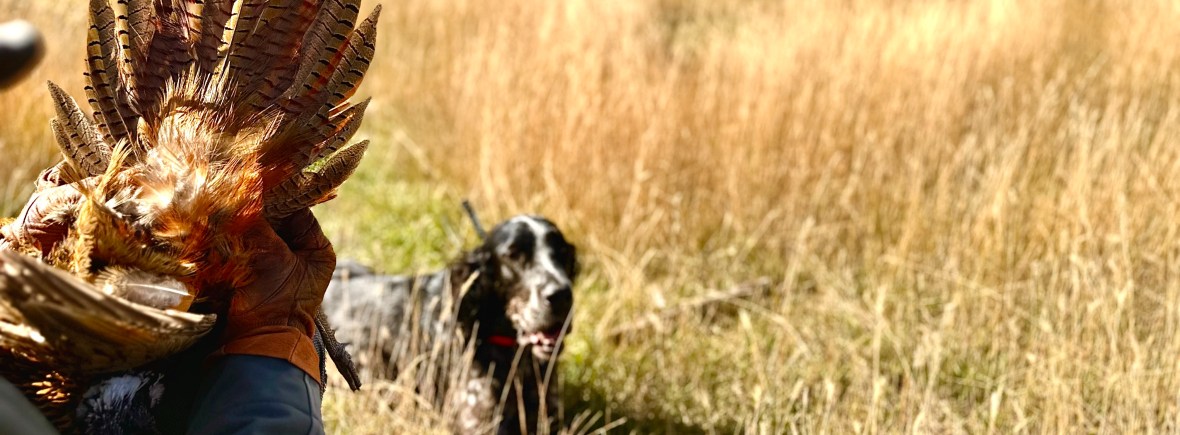
Winded, blistered, and empty-handed, I watched as my English setter, Sage, mashed the brakes and drifted, churning a sheet of ribboning grass like a jet ski on glass seas. Finally, a flawless point in undisturbed country unveiled an opportunity I’d driven 1,600 miles to find. It was just us, as a knoll separated me from the rest of the group I’d formally met only days prior. Beyond her nose was the rousing unknown, waiting behind cover like a coveted toy beneath wrapping paper.
Northeastern Montana is home to three prominent upland species—ring-necked pheasant, sharp-tailed grouse, and Hungarian partridge—all of which I hoped to get into over the course of a week in early October.
A covey rise echoed the sounds of a squeaky door hinge across the prairie, punctuated with a sure shot and a mouthful of feathers—evidence of a sequence gone exactly according to plan.
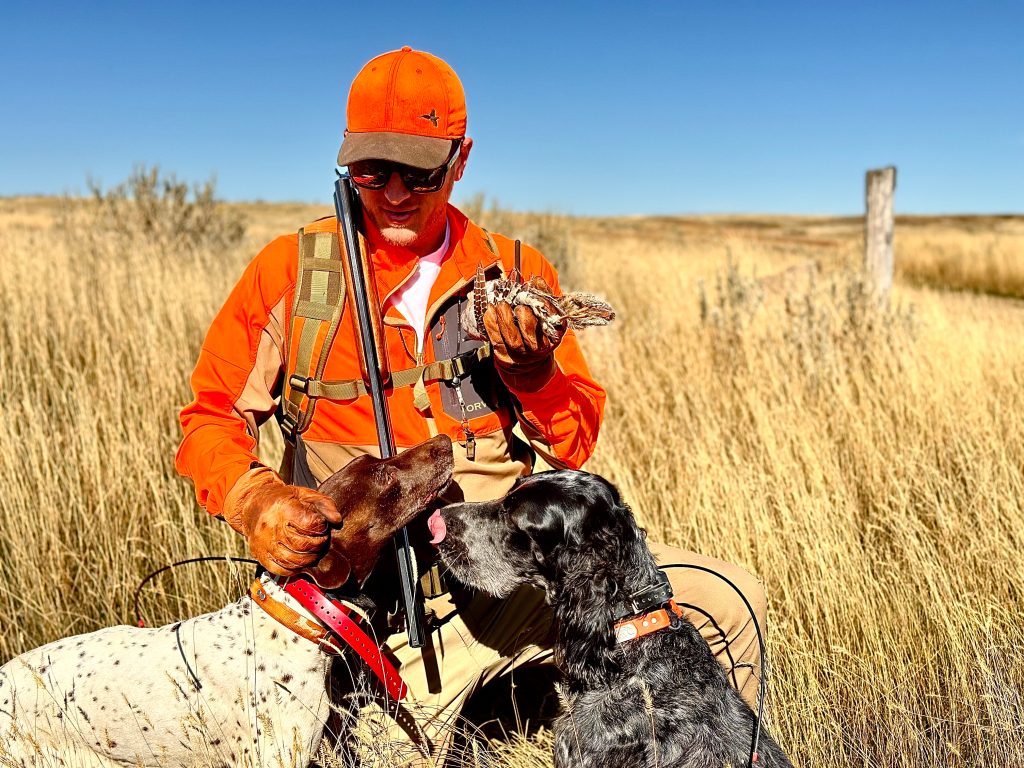
With some invaluable weight in my game bag, I approached one of the trucks with a proud grin I could feel in my ears. Waiting for me were five fellow wingshooters, torn between jealousy and optimism, a dilemma a zealous hunter can only suppress once the shots become plentiful. But a week’s worth of conversations showed I had far more in common with my counterparts than the angst of wanting the next bird.
“Ain’t no flex like taking a wild bird on public land,” said Branden, the youngest of my new friends and the only other who’d already taken a bird. “Those Texas boys can pay to push hen pheasants all day long, but it won’t ever be the same thing.”
A Shot in the Dark
True wingshooters revel in the art of bird hunting, rather than its rewards—that’s what pulled me into this lifestyle, anyways. And, I’d spent the better part of a year searching for uplanders who shared a particular patience to chase wild birds through unfamiliar cover. After years driving cross country to meet up with fellow bird-hunting friends, I was determined to find some in my area who weren’t looking for just another shooter to jump on a lease. It couldn’t just be me down here.
A message in 2022 to a Texas quail hunting Facebook group read, “I’m 29 years old and run an English setter all over Texas in pursuit of quail, but also travel out of state for a bucket list upland hunt at least once a year. I’ve been living in Austin, Texas, for six and a half years and have struggled to cross paths with too many fellow upland hunters, so here’s a shot in the dark if anyone in the group is also in search of some hunting buddies who love birds and bird dogs.”
Expecting a fair number of replies comparable to a “Best of Craigslist” listing, I wasn’t disappointed. However, most of the interest I garnered came from regular people looking for any number of things. One out of some 50 messages stuck out to me, coming from Greg, a 35-year-old school resource officer.
In a direct message, he told me about a group of hunters with a primary focus on dog work and a penchant for traveling to find wild birds. The group, which formed via fervent encounters on public land, comprises anywhere from four to eight gunners, depending on which of the three text threads pings me with a new message. And, it’s everything you think it is—mostly dudes joking around about nonsense before they inevitably bring up dogs or birds. Well, that was easy.
In a matter of days, I was planning a 2023 trip to Montana, as this same group had knocked out Hells Canyon in Idaho a few years prior and immediately penciled this trip into their calendars. Decent timing, eh?
Almost a year later, I was riding shotgun in Greg’s pickup on a 24-hour drive from Austin to Fort Peck, Montana, where we’d eventually meet up with four other hunters. The only thing that could make that kind of drive with a stranger anything short of a nightmare is a common interest with a lot of depth. We had that.
After a night in Fort Collins, Colorado, we hit the road early enough to arrive at the cabin with ample time for a quick sunset jaunt, should the crew feel eager—they did. We decided to push around some nearby cover, only seeing a few birds flush wild off in the distance. But the juices were flowing.
As I sat down for dinner in the modest cabin we’d call home for the next week, the sounds of a busy kitchen emitted echoes of my Uncle Steve’s voice razzing me about my subpar cooking abilities, and, of course, my assumed role as the designated dishwasher. Somehow at 30 years old, I was yet again the youngest and the newest member of the group. But such a dynamic once led to years of ruffed grouse hunting in Wisconsin with my uncle and his buddies, so I welcomed this demotion with ready hands.
Big Skies and Big Drives
Topographic maps served as place mats, equating our dinner table to a war room. Introductions were brief, as first-day jitters had each of us laser-focused on the task at hand. Sharpies were the top priority, with Huns second, and pheasants a perk given the season opened the day before we arrived.
Our first full day of hunting staged a different approach than I’d ever seen in the uplands. A product of grouse hunters who live and die by the words of George Bird Evans and hunt over his Old Hemlock setters, I was accustomed to an artful stealth, which doesn’t always amount to more birds, but certainly lends itself to dog work. This was an ambush.
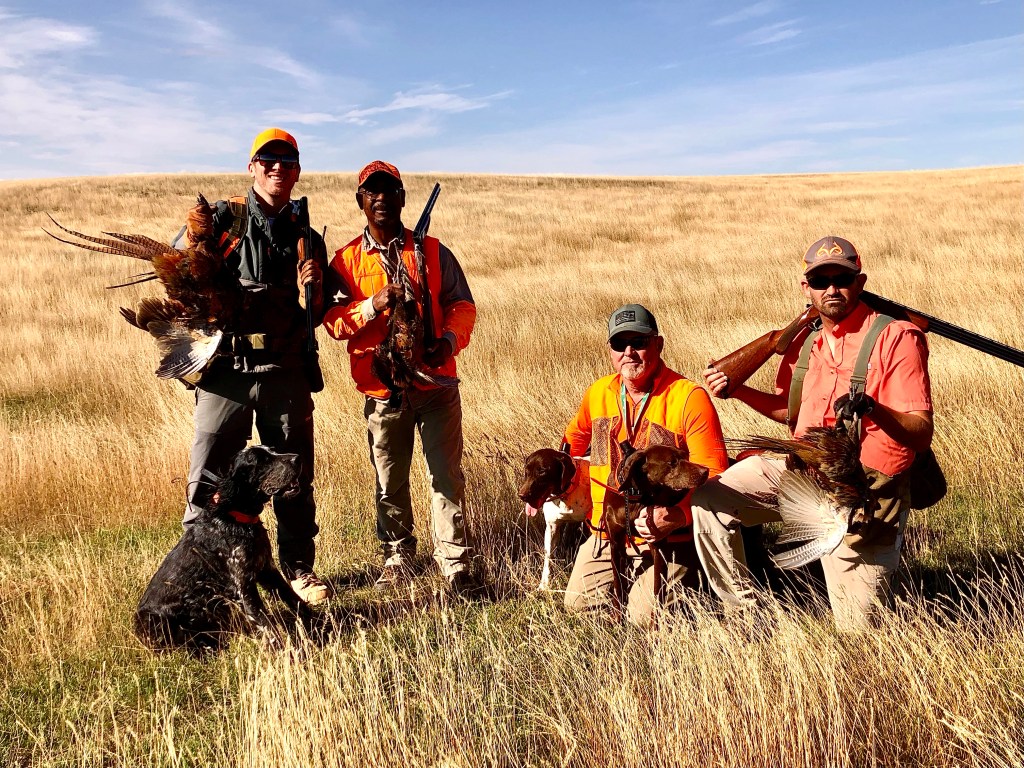
Jesse, Branden’s father and the architect of my newfound tribe, grew up hunting rabbits in Louisiana for years before ever running a bird dog. The 59-year-old Airforce veteran works his stable of German shorthaired pointers like a pack of beagles, a tactic that unquestionably took some getting used to. Branden, a 34-year-old professional mixed martial arts fighter, adopted his dad’s style as any hunter does, which is particularly evident when you watch the two alongside each other. Also sporting a pair of GSPs was Carl, a 61-year-old carpenter who has chased birds in the same manner for more than a decade. Last was Boyd, a 57-year-old software engineer who brought four GSPs of his own, bringing us to a total of 11 dogs, all of which were GSPs except Sage.
As a guest, admittedly the curious type, the process was nothing short of a spectacle. Beeping collars, frequent whistles and not-so-subtle hollering across open country created symphonic chaos. Quiet became unsettling, the absence of blaze orange startling.
Our first morning took us deep into rolling prairies that reached for our waists with auspicious blonde grass. In a matter of minutes, dogs were pointing. A choppy series of hen pheasants teased us like a touchdown called back for a holding penalty. Pushing on, we collectively worked a saddle before a knoll we all agreed passed the eye test. The dogs were already birdy, as if they recognized the same enticing cover we did.
A roaring covey rise prompted every one of us to anxiously shoulder our shotguns.
“Hen!” some half of us yelled out to prevent an illegal shot on a female pheasant.
Fat, gray birds poured out of the grass and over our heads like an air raid, freezing us with hesitation.
“No, those are sharpies!” yelled Branden, who quickly fired off a shot at a bird Greg winged a split-second prior.
Down went the first sharpie of the trip, which was enough to light a fire of both congratulation and regret, as we should’ve each doubled on a covey so big. That will surely haunt me for the rest of the week.
The first two afternoons were particularly warm, so I knew I’d have to pace Sage if I wanted her to hunt all week—the drawback of running one dog. I didn’t take a bird on the first day, though I did manage to see all three species, whether it was a pheasant someone else took or a rogue covey of Huns that flushed wild 100 yards ahead.
It wasn’t until the second day that I was able to relieve some pressure. After showing off my first-ever Hun to the guys while recreating the scene only I was able to see unfold, I was finally able to redefine my priorities. This was about comradery, the objective of the collective, and, most of all, Sage. Birds in hand were simply a bonus.
Another hot day saw waning dogs, the stripping of layers and a satisfactory number of birds. However, halfway through our four-day hunt, we all started to question whether we had set up our base camp in the most optimal area. Greg was able to connect with a local wildlife official who told us we were about two hours west of prime upland hunting, pointing us to the northeastern corner of the state for more birds at the cost of more hunters. We were all game to pivot.
A Good Call
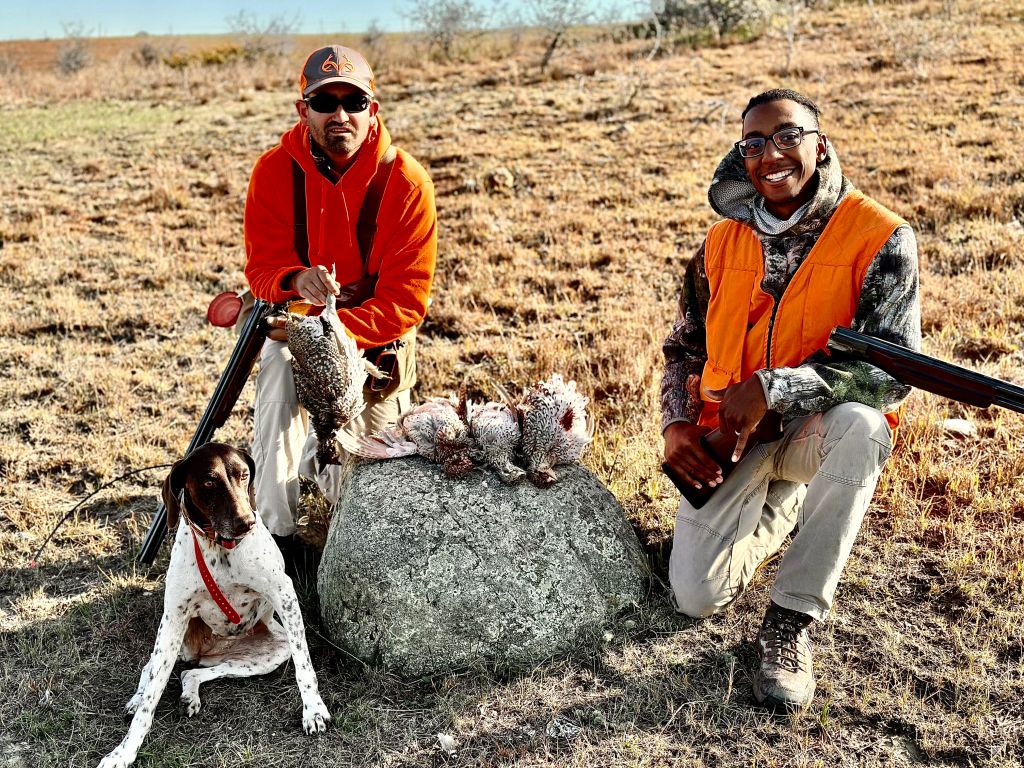
Our third day started painfully early, as we had far more ground to cover before first light. The first unit immediately offered positive reinforcement, as three roosters flushed from the road before we could even put the trucks in park. Dogs howled in harmony as we rushed to dump shells into our vests before another bird could flush wild.
Jesse and Carl took a pair of dogs down into the nearest coulee (Montana speak for a creek bottom), following some generous advice from our friend on the phone. The rest of us split up to cover as much ground as possible and let each of our dogs work.
Sage locked up and began creeping—her signature signal for birds on the move—honed in on country I could see Greg and Branden attempting to pinch. A covey of 10-15 sharpies flushed out ahead, drawing rushed shots and sighs of disappointment. However, without question, we had finally landed on the real Montana uplands.
Rolling hills of grass and thickets held a healthy mix of sharpies and pheasants but Sage and I couldn’t seem to escape the abundance of hen pheasants. The ringing of sporadic shots off in the distance suggested the others were having better luck, but surely I would hit paydirt by my own course eventually.
As I went to a knee to give Sage some much-deserved water, I could hear Branden and Greg making their way up from another coulee, giving me the same look I was giving them: “Anything?”
With my shotgun over my shoulder, I watched as they closed the gap, but not before a covey of sharpies would flush from the next thicket ahead, flying right over me, Sage, and an empty firearm.
“What are you doing?” Greg asked sarcastically after a longer-than-ideal shot over my head. “You didn’t see those birds?”
After a quick breather and few more jokes at my expense, we split once again, now making our way back toward the trucks. In a matter of minutes, Sage was locked up and creeping once again, but this time on a rooster. Boyd made his way over toward me with one of his GSPs to help pinch, but our bird juked us, causing both of us to reach on the trigger.
Twenty minutes later, we gave up on what we deemed a winged bird on the run and started back toward the others. As soon as we could see the trucks on the horizon, a flood of shots rang out like fireworks at the turn of a new year. Upon closer examination, Boyd and I could see Branden and Greg each holding a pair of sharpies.
“Did y’all both double on the same covey?” I asked incredulously.
I’ll spare you the abuse, but the answer was yes.
Coulee Chaos
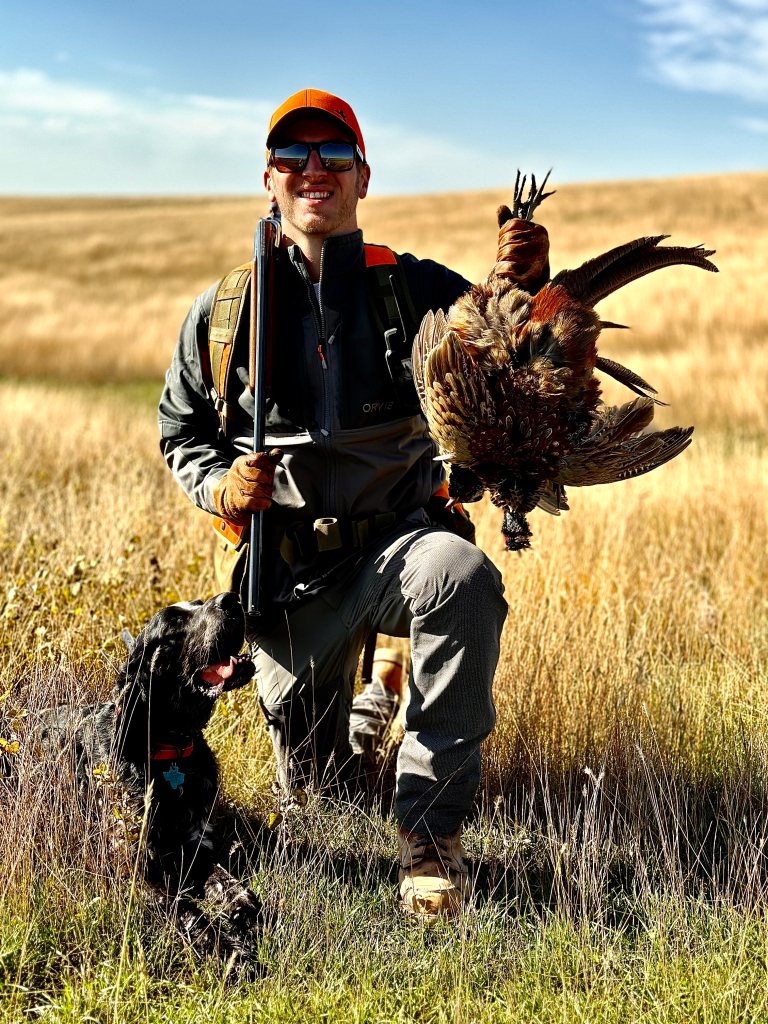
After a quick lunch, we decided to head up to the other side of first unit, as onX Maps showed another with a broad coulee running from one end to the other. Upon arrival, we were certain we’d have to come up with another plan, as the public access road was blocked by a private property.
“I’ll just go ask the guy,” said Boyd, who was growing impatient with our hesitation. “What’s the worst that could happen?”
He returned with a humble grin, as well as good news.
“We’re all good to go,” he said laughingly. “Man, you know this place probably never gets hunted either.”
That had to be true.
We were only able to drive to the edge of the private property and had to cross a barbwire fence to access the unit, but we could make out a coulee along the horizon, so we began blazing a trail. As soon as we breached timber and submerged ourselves into the grass, all hell broke loose.
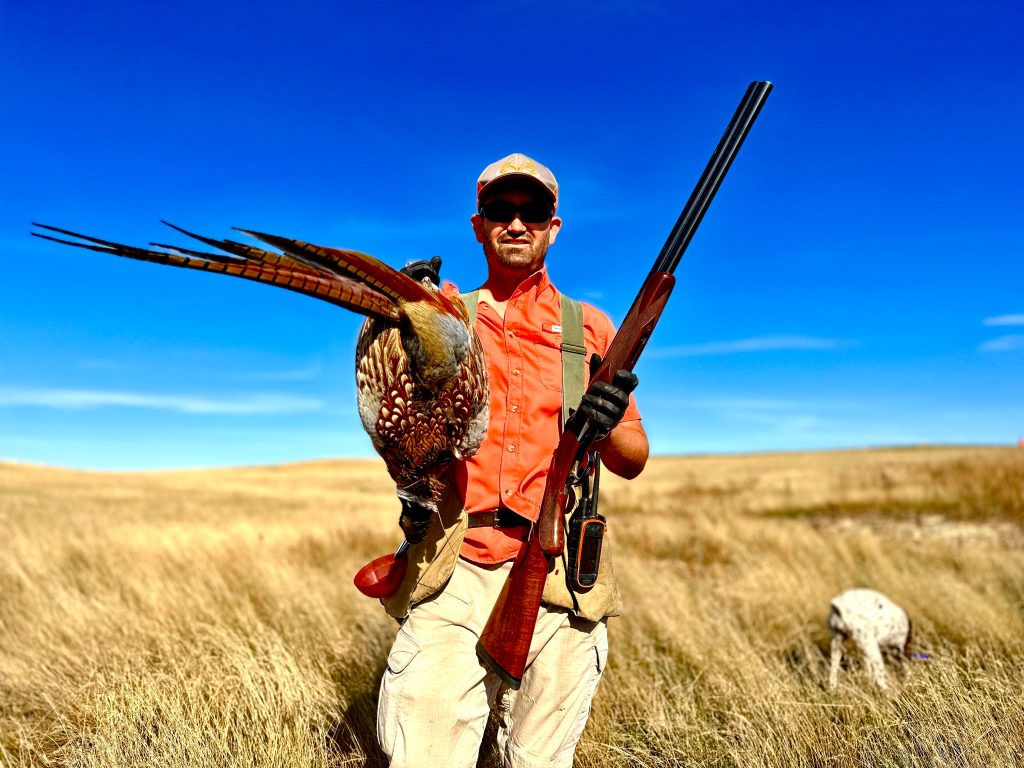
“Rooster!” is an exclamation you’ll hear in any pheasant hunting YouTube video, but here it was merely mannerly. There were more roosters than any of us could shoot in one day, and at this point, we all had at least one bird in our bag, so the hunt had truly become a team effort. And, because we were exclusively hunting the coulee, we were able to work as a unit, with dogs on each side and a few more down below.
My own peak of the trip unfolded as soon as I was able to take the bottom, as the landscape created stadium seating for Sage’s performance. As she neared a patch of grass sure to hold birds, I took an inventory of where everyone was, knowing my new friends were likely about to see her at her best—she’s always shined brighter with single birds than covey birds, and this was the best pheasant country I’d ever seen. She locked downwind of a breeze, her long hair and the blonde ripples surrounding flowing as one. She crept ever so slightly, with her tail at a 90-degree angle like a tip-up indicating a bite.
A mature rooster flushed straight up, Sage held, and I squeezed.
“Bro, that’s YOUR dog right there!” yelled Branden, who was standing abreast. “Get some, Sage!”
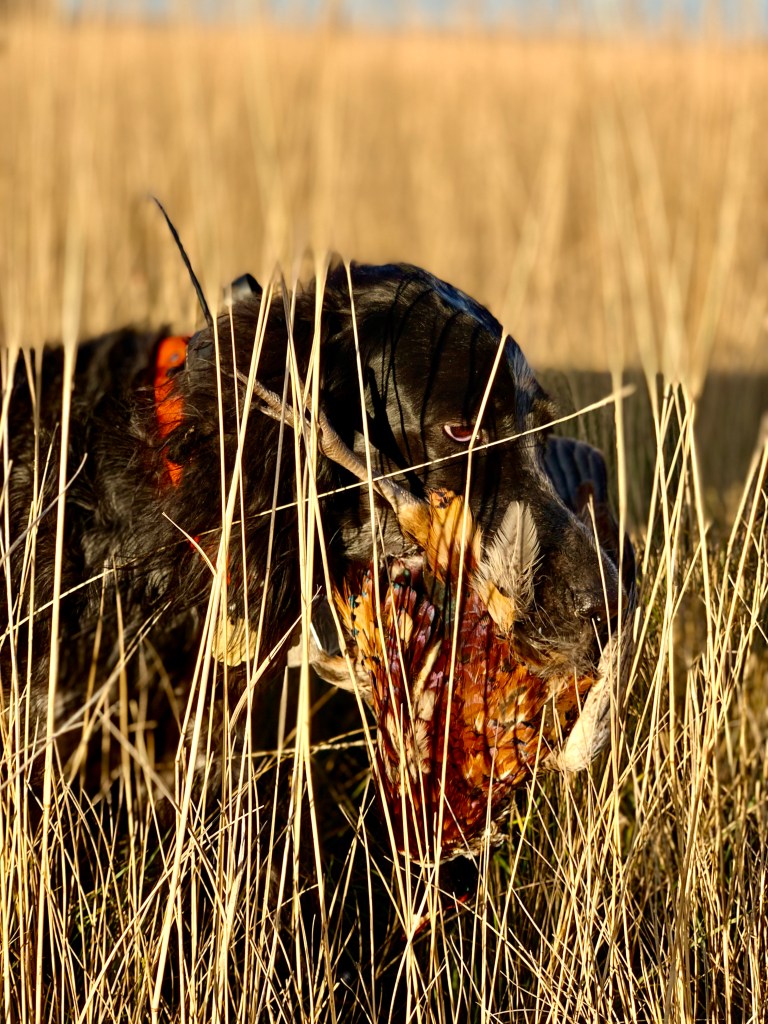
Seconds later, three of the other dogs were on birds, and roosters were flushing faster than any one of us could load shells. Carl was hollering and waving his arms like a maniac atop the tree line to alert us of pheasants getting up around the bend; Greg was doing a victory dance after his GSP, Annie, had retrieved a rooster of her own; Boyd and Branden were laughing hysterically as Jesse fumbled over his safety for the umpteenth time. If George Bird Evans were to write this book, it would be called A Dog, a Gun, and Unbridled Joy.
The hunting continued all the way back to the trucks, eating up four or five hours of our day without a complaint from the group. Dogs were still pointing off in the distance as some of us took photos with our birds. We probably could have trekked back through all the country we just worked and still move half as many birds. It was that good.
With less than two hours until sunset, we decided to target sharpies—the novelty of these parts—as we’d drummed up enough pheasant action to go home happy. We worked a few smaller, but promising ag fields that ultimately produced a covey or two, but the birds were simply wild, likely because of all the early-season pressure sharp-tails tend to experience. Then, as the horizon began to swallow time in the day’s final bow, a small covey scurried across an old farm road ahead of Greg’s truck.
“Go ahead, Dave,” Greg said with haste, having already taken his double earlier that morning. “Just grab the dog and go.”
Sage and I jumped out of the truck like an airborne unit that doesn’t have the time or luxury of overthinking the task ahead. Then, employing a run-and-gun approach I surely learned from the gang’s fast-paced style of hunting, I ran past Sage’s point and flushed a single sharpie from the grass. One of all three species, baby.
As I walked back to the road, Carl was leaning against Greg’s truck with his arms crossed, grinning like my old man after my first home run back in my little league days.
“You havin’ fun yet, Dave?” he asked rhetorically.
A dap and a hug sealed the single best day of hunting I’d ever had.
Curtain Call
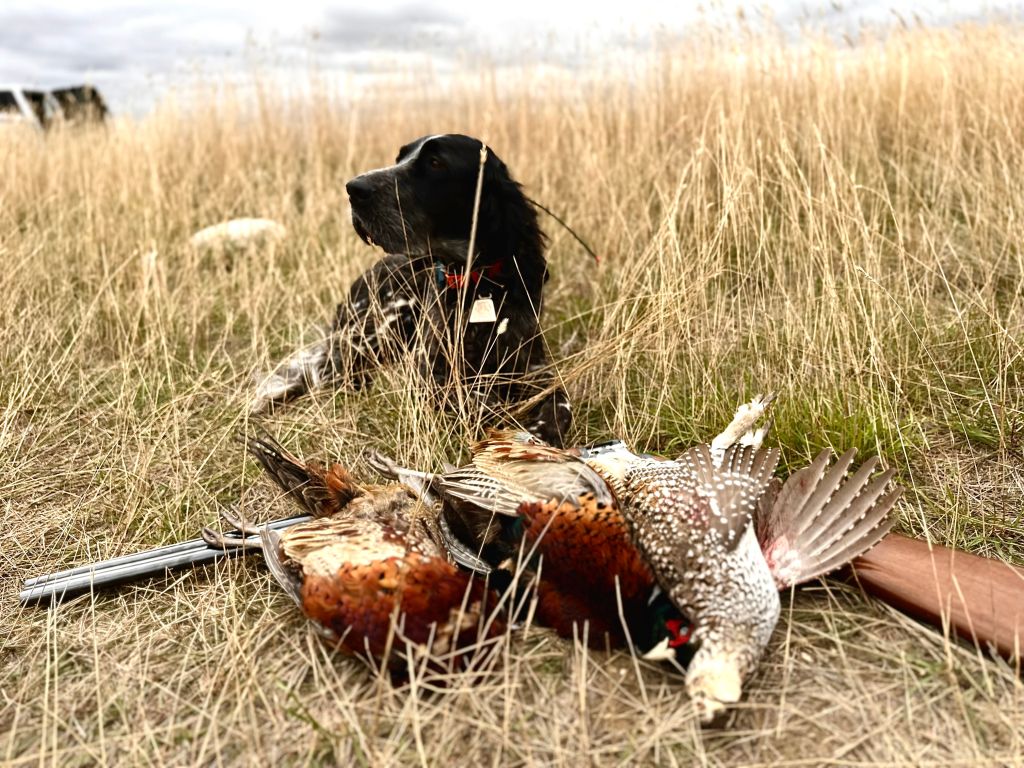
The fourth and final day of our trip was much like the third, as coulees were the name of the game, and vests never felt light. Recurring jokes and clown insurance (that one’s just for those guys if they read this) kept tired legs marching on. Single pheasant flushes were never hard to come by, but sharpies would continue evading us.
As I walked back to the truck one last time, I was trying to count all the birds we’d gotten but determined it was impossible. I knew several of us limited out on pheasants over the last two days, but at a certain point, the actual number becomes extraneous. The only number I could come up with was five—as that wishful Facebook post aimed to find maybe one fellow bird hunter.
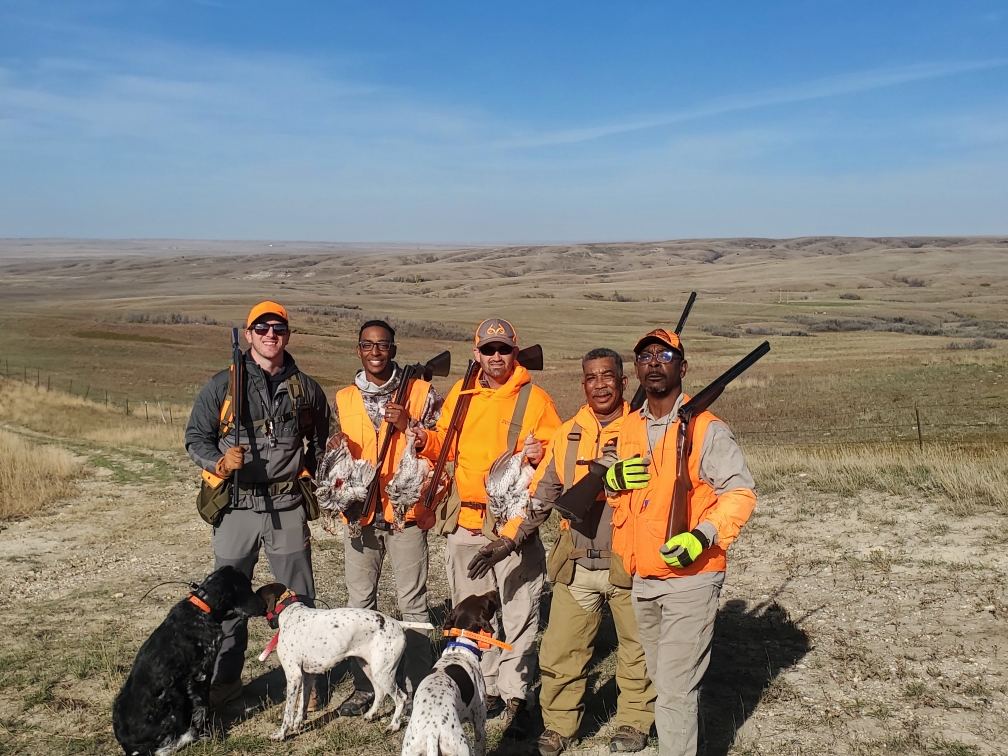
With each taxing step, the trucks were getting harder and harder to see. For four days in a row, we had squeezed every ray of sunlight Big Sky Country had to offer. As we crested the final hill of our hunt and looked onward in favor of the dying day, we paused, fixed on what stood between without a single spoken word. Congregated in the final draw below were no less than 100 pheasants, flushing in unison toward the next coulee over, demanding our imminent return.
 David Schlake